


The most popular cryptocurrencies
Cryptocurrencies are the payment engine behind modern online casinos. They let you deposit and withdraw quickly, often with lower fees and more privacy than cards or bank transfers. But not every coin behaves the same way – some are fast and cheap, some are widely accepted, and one is designed to hold a stable value. Below is a plain-language guide to the coins you will meet most often at a crypto casino, and how to choose between them.
Bitcoin (BTC)
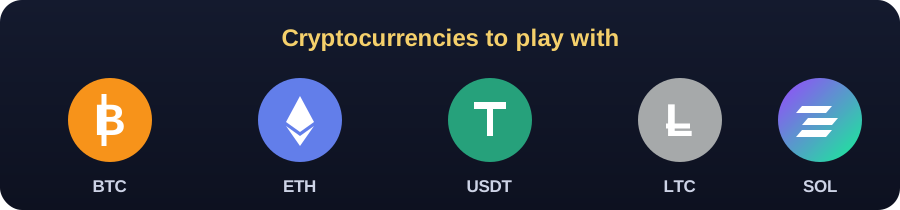
The original cryptocurrency and still the most recognised. Bitcoin is accepted almost everywhere and is the default choice at any bitcoin casino. Its main trade-off is on-chain fees and confirmation times, which rise when the network is busy. The Lightning Network solves much of this, turning small BTC payments into near-instant, low-cost transfers – ideal for deposits and cashouts.
Ethereum (ETH)
Ethereum powers a huge ecosystem of tokens and applications, and it is broadly accepted at casinos. Transfers are quick, though ERC20 network fees can spike during heavy traffic. It is a solid choice where a site integrates tokens or on-chain features.
Tether (USDT)
A stablecoin pegged to the US dollar, so its value does not swing like BTC or ETH. That makes USDT a favourite for players who want their balance to hold steady. On the TRC20 network fees are very low and transfers are fast, which is why many casinos highlight USDT as a preferred method.
Litecoin (LTC)
Litecoin is valued for fast, cheap transactions. For frequent, smaller deposits and withdrawals it is often the most convenient option, with predictable low fees and quick confirmations.
BNB and Solana (SOL)
BNB works well where low fees and quick transfers matter. Solana goes further, settling transactions in seconds for a tiny cost, which suits players who deposit and withdraw often and want speed above all.
Dogecoin and other altcoins
Dogecoin and a growing list of altcoins appear as add-ons to the main methods. Their advantage is usually a very low transfer cost, but check that your casino supports the specific coin and network, and watch for liquidity before using a niche asset.
Quick comparison
| Coin | Network | Transfer speed | Fees | Best for |
|---|---|---|---|---|
| Bitcoin (BTC) | Bitcoin / Lightning | 10–30 min (instant on Lightning) | Low–high | Widest acceptance |
| Ethereum (ETH) | ERC20 | Minutes | Variable | Token ecosystems |
| Tether (USDT) | TRC20 / ERC20 | Minutes | Very low on TRC20 | Price stability |
| Litecoin (LTC) | Litecoin | Minutes | Very low | Cheap, fast cashouts |
| Solana (SOL) | Solana | Seconds | Tiny | Speed |
| Dogecoin (DOGE) | Dogecoin | Minutes | Low | Small transactions |
How to choose a coin for casino play
There is no single best coin – it depends on what you value. Pick a stablecoin like USDT if you want your balance to hold its value; choose LTC or Solana for cheap, fast transfers; use Bitcoin for the widest acceptance, ideally over Lightning for small amounts. Whatever you choose, always match the network the casino expects, send a small test transaction the first time, and double-check the address before you confirm – crypto transfers cannot be reversed.
Remember that non-stablecoins can rise or fall in value while your funds sit in a casino balance, and that winnings may be taxable depending on where you live. Keep your own records, secure your wallet with a strong password and two-factor authentication, and never deposit more than you can afford to lose.